



Approximately 20% of SQE2 candidates do not pass on their first attempt. That statistic represents hundreds of aspiring solicitors each assessment window who must confront a difficult question: what needs to change for the sqe2 resit to succeed where the first attempt fell short?
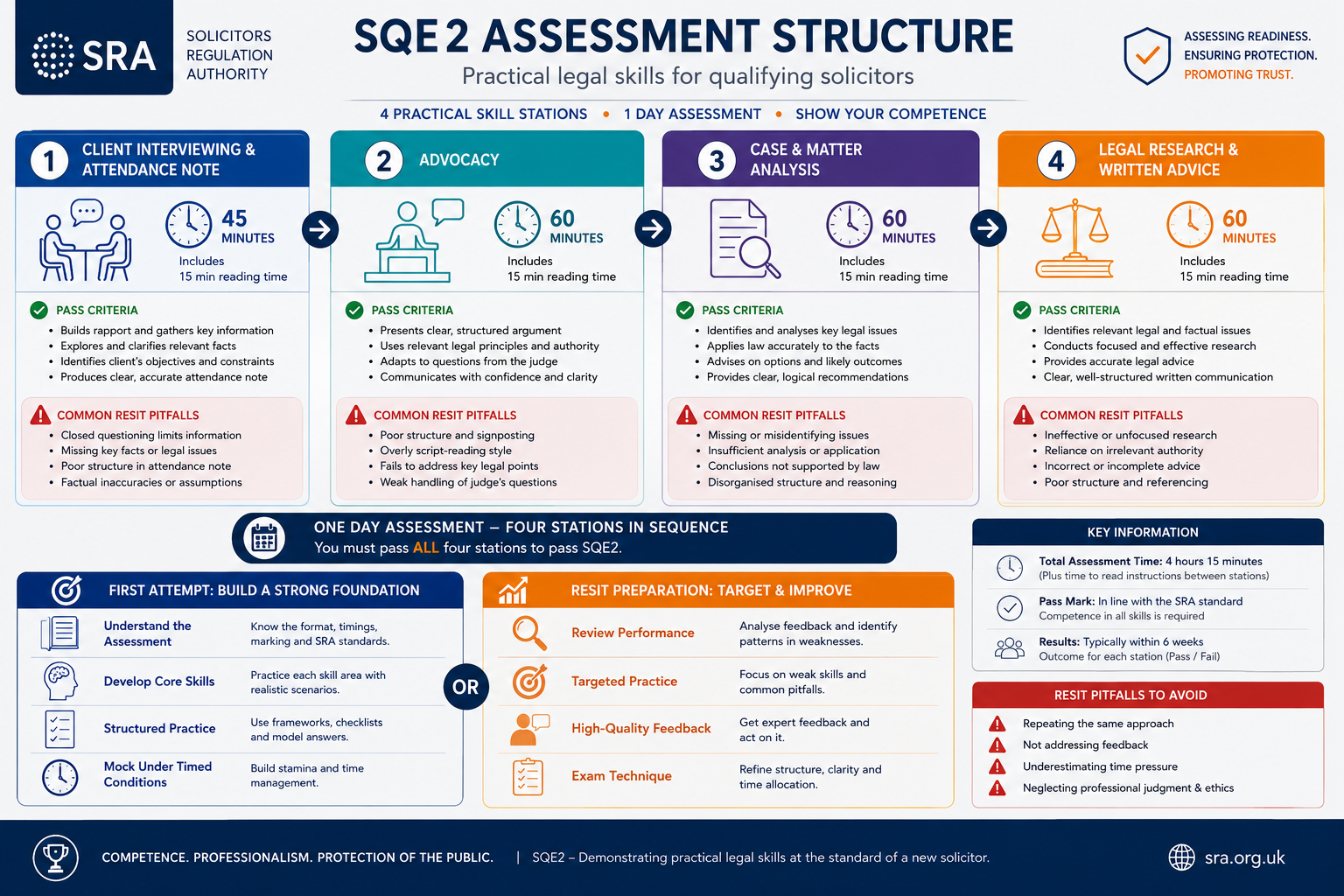
The SQE2 assessment tests practical legal skills through four distinct stations, Client Interviewing, Advocacy, Case Analysis, and Legal Research. Unlike SQE1’s multiple-choice format, SQE2 demands live performance under examiner observation. When candidates face an sqe2 resit, they’re not simply revisiting content; they’re addressing fundamental gaps in skill execution, time management, or examiner expectations that prevented success the first time.
This guide provides step-by-step guidance on what actually changes when you prepare for an sqe2 resit, how to interpret your feedback strategically, and the practical next steps that give resit candidates a clear pathway to qualification.
Key Takeaways
- SQE2 resit candidates receive detailed feedback identifying which skill stations fell below the competency threshold, enabling targeted preparation rather than generic revision
- The assessment format and examiner expectations remain identical for resits, but candidates must demonstrate measurable improvement in previously weak areas to pass
- Strategic resit preparation focuses on examiner-led feedback, timed practice under realistic conditions, and addressing specific skill deficits rather than repeating broad prep courses
- Candidates have no limit on resit attempts, but each sitting incurs the full assessment fee and requires booking through the SRA portal during standard windows
- Pass rates for SQE2 resits align closely with first-time attempts (around 80% as of January 2026), indicating that targeted preparation effectively addresses initial shortcomings
Understanding Your SQE2 Results and Feedback
When you receive SQE2 results, the SRA provides more than a simple pass/fail notification. Candidates who do not meet the required standard receive a breakdown showing performance across each of the four assessment stations. This feedback is the foundation of effective sqe2 resit preparation.
Each station, Client Interviewing & Attendance Note, Advocacy, Case & Matter Analysis, and Legal Research & Written Advice, is assessed independently. You might pass three stations convincingly but fall short in one. The feedback indicates which stations require improvement and, in some cases, provides examiner comments on specific competencies that were not demonstrated to the required standard.
Interpreting your feedback strategically:
- Identify which stations you failed and by what margin (feedback may indicate whether performance was borderline or significantly below standard)
- Review the assessment criteria for those specific stations published by the SRA
- Note any patterns in examiner comments, repeated mentions of time management, incomplete analysis, or poor client communication signal clear areas for targeted work
- Compare your performance against the published competency statements to understand exactly what examiners expected to see
This feedback is not generic. It reflects your actual performance on assessment day and provides a roadmap for what must improve. Candidates who treat this feedback as a checklist rather than a disappointment consistently perform better on resits.
For context on how SQE2 differs structurally from SQE1, our complete guide to SQE2 vs SQE1 key differences explains the transition between knowledge testing and skills assessment.
What Actually Changes for an SQE2 Resit
The assessment itself does not change. The format, timing, examiner expectations, and competency thresholds remain identical whether you’re sitting SQE2 for the first or fourth time. What changes is your preparation strategy and your understanding of what examiners are looking for.
Key differences in resit preparation:
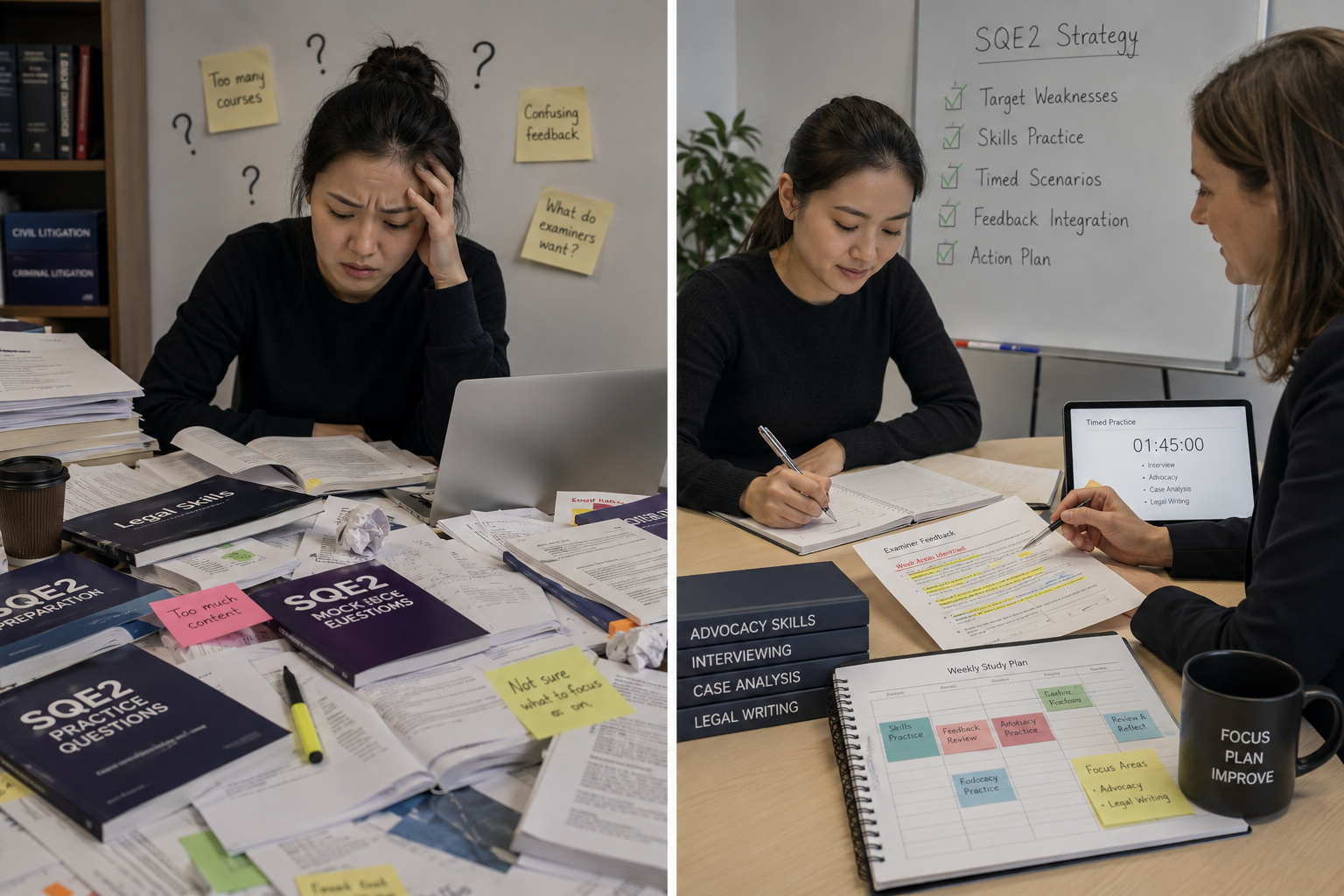
Targeted skill development: Instead of preparing broadly across all four stations, resit candidates focus intensively on the stations they failed. If you passed Client Interviewing and Advocacy but failed Case Analysis and Legal Research, your preparation should allocate 80% of effort to those two areas.
Examiner feedback integration: First-time candidates often rely on generic prep courses that teach foundational skills. Resit candidates have specific examiner comments identifying gaps, failure to identify key legal issues, incomplete attendance notes, poor time allocation, or weak legal reasoning. These comments must drive your study plan.
Realistic timed practice: Many first-time failures stem from time management rather than legal knowledge. Resit preparation must include full timed run-throughs of each station under exam conditions. Practice scenarios should mirror the complexity and time pressure of the actual assessment.
Skills coaching over content review: SQE2 does not test legal knowledge in the same way SQE1 does. Resit candidates benefit more from one-on-one skills coaching, working with qualified solicitors who can observe your performance, identify subtle weaknesses, and provide actionable corrections, than from reading more textbooks.
Mental preparation and confidence rebuilding: Failing SQE2 impacts confidence. Resit candidates must address the psychological dimension, managing exam anxiety, rebuilding self-belief, and approaching the assessment with a clear, calm mindset. This is not optional; it directly affects performance on the day.
Candidates wondering about the broader implications of multiple attempts should review our guidance on what happens if you fail the SQE 3 times, which clarifies SRA rules and long-term qualification pathways.
Practical Steps to Prepare for Your SQE2 Resit
Effective sqe2 resit preparation follows a structured, evidence-based approach. Here’s a step-by-step plan that addresses the most common reasons for initial failure:
Step 1: Analyse Your Feedback in Detail
Spend at least two hours reviewing your results and examiner comments. Create a written document listing:
- Each station you failed
- Specific competencies marked as below standard
- Examiner comments (verbatim)
- Your honest assessment of what went wrong (time pressure, nerves, lack of practice, misunderstanding the task)
This document becomes your preparation roadmap.
Step 2: Book Your Resit Early
SQE2 runs four times a year (January, April, July, October). Book your resit as soon as you’ve processed your results and committed to a realistic preparation timeline. Booking early ensures you secure a place and creates a firm deadline for your study plan.
Current SRA guidance allows unlimited resit attempts, but each sitting incurs the full assessment fee. Verify the latest fee structure on the SRA website before booking.
Step 3: Source Targeted Skills Training
Generic SQE2 prep courses are designed for first-time candidates. Resit candidates need targeted intervention:
- One-on-one coaching: Work with a qualified solicitor or SQE2 tutor who can observe your performance in the failed stations and provide specific corrections
- Specialist workshops: Some providers offer resit-focused workshops addressing common failure points (e.g., attendance note structure, advocacy opening statements, legal research methodology)
- Peer practice groups: Connect with other resit candidates to run timed practice scenarios and provide mutual feedback
Avoid simply re-reading the same materials. Skills improve through practice and feedback, not passive study.
Step 4: Create a Timed Practice Schedule
Allocate at least 6-8 weeks for intensive resit preparation. Your weekly schedule should include:
- 3-4 full timed practice sessions for each failed station
- 1-2 feedback sessions with a coach or experienced solicitor
- 1 full mock assessment day replicating all four stations in sequence
- Reflection time to review recordings or notes from practice sessions and identify incremental improvements
Time management is the single most common reason for SQE2 failure. Every practice session must be timed and treated as if it were the real assessment.
Step 5: Address Non-Technical Factors
Performance on SQE2 is affected by factors beyond legal skill:
- Exam anxiety: Consider techniques like visualization, breathing exercises, or working with a performance coach if nerves significantly impacted your first attempt
- Physical stamina: SQE2 is a full-day assessment. Ensure you’re physically prepared, adequate sleep, nutrition, and fitness all affect concentration and performance
- Logistics: Familiarize yourself with the assessment venue, travel time, and what to bring. Eliminate any logistical surprises on the day
Candidates who address these factors alongside technical skill development consistently report improved confidence and performance.
For those balancing resit preparation with work or other commitments, our article on studying for the SQE part-time offers practical scheduling strategies.
Common Mistakes Resit Candidates Make
Even with feedback and a clear plan, resit candidates often repeat avoidable errors:
Mistake 1: Treating the resit like a first attempt. Resit candidates have specific, documented weaknesses. Preparing broadly across all stations wastes time and dilutes focus. Prioritize the stations you failed.
Mistake 2: Ignoring examiner feedback. Some candidates dismiss feedback as subjective or unfair. Examiner comments reflect the competency standards you must meet. Ignoring them guarantees repeated failure.
Mistake 3: Under-practicing under timed conditions. Reading about how to conduct a client interview is not the same as conducting one in 15 minutes under observation. Skills develop through repeated timed practice, not theory.
Mistake 4: Failing to seek external feedback. Self-assessment is unreliable. You need an experienced observer to identify subtle weaknesses, poor eye contact, unclear explanations, incomplete legal analysis, that you cannot see yourself.
Mistake 5: Booking the resit too soon. Rushing into a resit without adequate preparation leads to repeated failure. Most successful resit candidates allow 8-12 weeks of focused preparation. If you need longer, take it.
Understanding how many people fail SQE2 and the common reasons why can help you avoid these pitfalls and approach your resit strategically.
How Resit Performance Compares to First Attempts
Current data from the SRA indicates that SQE2 pass rates for resit candidates align closely with first-time pass rates, both hovering around 80% as of the January 2026 sitting. This suggests that candidates who address their specific weaknesses through targeted preparation are just as likely to pass as first-time candidates.
However, this statistic masks important nuances:
- Candidates who fail by a narrow margin (borderline performance in one station) tend to pass resits at higher rates than those who fail multiple stations significantly
- Resit candidates who invest in professional coaching and structured practice outperform those who simply repeat their original preparation
- Time between attempts matters, candidates who allow adequate preparation time (8-12 weeks minimum) perform better than those who rush into the next available sitting
The key insight: sqe2 resit success is not about luck or hoping for easier scenarios. It’s about measurable improvement in the specific competencies you failed to demonstrate the first time.
For broader context on SQE pass rates and what constitutes a competitive score, see our analysis of what is a good SQE score.
Booking and Administrative Considerations for SQE2 Resits
The practical process of booking an sqe2 resit is straightforward but requires attention to deadlines and fees:
Booking process:
- Log into your SRA account (the same account used for your first attempt)
- Navigate to the SQE2 booking section and select your preferred assessment window
- Pay the full assessment fee (verify current fees on the SRA website; they are subject to periodic review)
- Receive confirmation and assessment details approximately 4-6 weeks before the sitting
Important administrative points:
- There is no limit on the number of resit attempts, but each requires the full fee
- You can only sit SQE2 once per assessment window (four opportunities per year)
- If you passed some stations but failed others, you must resit the entire assessment, there is no station-by-station resit option
- Your previous results remain on record, but only your most recent attempt determines whether you meet the SQE2 requirement for qualification
Financial planning: Each SQE2 sitting represents a significant financial commitment. Factor in not just the assessment fee but also costs for coaching, travel, accommodation (if required), and any time off work. Candidates who budget realistically and invest in quality preparation tend to avoid multiple resits.
For a complete breakdown of SQE-related costs, including preparation and assessment fees, our guide on the cost of taking the SQE exam provides current figures and budgeting advice.
Moving Forward After Your SQE2 Resit
Passing your sqe2 resit is a significant milestone, but it’s not the end of your qualification journey. Once you’ve successfully completed SQE2, you must also:
- Complete SQE1 (if not already passed), SQE1 and SQE2 can be taken in any order, but both must be passed
- Complete two years of qualifying work experience (QWE),this can be done before, during, or after your SQE assessments
- Meet the SRA’s character and suitability requirements
- Apply for admission as a solicitor of England and Wales
The SQE route offers flexibility, but all components must be completed to qualify. Candidates who pass SQE2 on a resit are on equal footing with first-time passers, there is no distinction on your qualification record.
For those still navigating the broader qualification process, our overview of SQE vs training contract pathways clarifies how the SQE route compares to traditional qualification methods.
Frequently Asked Questions
How many times can I resit SQE2?
There is no limit on the number of SQE2 resit attempts. However, each sitting requires the full assessment fee and must be booked during one of the four annual assessment windows. Candidates should focus on quality preparation rather than relying on multiple attempts.
Do I have to resit all four stations if I only failed one?
Yes. SQE2 does not offer station-by-station resits. If you fail any station, you must retake the entire assessment. However, your preparation can focus intensively on the stations you failed while maintaining competency in those you passed.
How long should I wait before attempting an SQE2 resit?
Most successful resit candidates allow 8-12 weeks of focused preparation between attempts. This provides sufficient time to address feedback, engage in targeted skills training, and practice under timed conditions. Rushing into the next available sitting without adequate preparation increases the risk of repeated failure.
Will my resit attempt be marked more harshly?
No. Examiners assess each candidate against the same competency standards regardless of whether it’s a first attempt or resit. The assessment criteria and pass thresholds remain consistent across all sittings.
Can I use my original SQE2 preparation materials for a resit?
You can, but they should not be your primary resource. Resit preparation must be driven by your specific examiner feedback and targeted at the competencies you failed to demonstrate. Supplement original materials with specialized coaching, timed practice, and skills-focused training.
Does failing SQE2 affect my chances of securing a training contract or legal role?
Employers typically focus on whether you ultimately qualify, not how many attempts it took. However, prolonged delays or multiple failures may raise questions. Be prepared to discuss what you learned from the experience and how you addressed your weaknesses, demonstrating resilience and self-awareness can be a positive.
Conclusion
An sqe2 resit is not a setback, it’s an opportunity to address specific skill gaps with targeted, evidence-based preparation. The candidates who succeed on resits are those who treat examiner feedback as a roadmap, invest in professional coaching, practice intensively under timed conditions, and approach the assessment with renewed confidence and clarity.
The SQE2 assessment measures practical legal skills that are fundamental to solicitor competence. Passing on a resit demonstrates the same competency as passing on a first attempt. What matters is that you meet the standard, not how many attempts it took to get there.
Your practical next steps:
- Review your examiner feedback in detail and identify specific competencies that require improvement
- Book your resit during the next realistic assessment window, allowing adequate preparation time
- Source targeted skills coaching and create a structured practice schedule focused on your weak areas
- Practice under timed, exam-realistic conditions and seek external feedback on your performance
- Address non-technical factors, exam anxiety, physical stamina, logistics, that may have affected your first attempt
Qualify with confidence. Your legal career journey continues, and with the right preparation, your sqe2 resit will be the final step toward meeting the SQE2 requirement for admission as a solicitor.
For additional support and resources, explore our SQE practice questions and connect with the broader community of aspiring solicitors navigating the qualification process.