



The Solicitors Regulation Authority (SRA) runs SQE2 assessments twice yearly, yet nearly 40% of candidates book their sitting without a structured preparation timeline, and many later regret it. Choosing your SQE2 exam date isn’t just about availability; it’s about aligning your skills practice, qualifying work experience, and life commitments into a realistic, achievable plan. This guide walks you through the confirmed SQE2 exam dates for 2026-2027 and shows you how to build a preparation timeline that sets you up for success.
Key Takeaways
- SQE2 assessments typically run in April and October each year, with booking windows opening several months in advance
- A minimum 12-16 week preparation period is recommended for most candidates to develop practical legal skills
- Your prep timeline should account for SQE1 completion, qualifying work experience progress, and personal commitments
- Early booking secures your preferred test centre and gives you a clear target date for structured revision
- Understanding the registration deadlines and late-booking fees helps you plan financially and avoid unnecessary costs
Understanding SQE2 Exam Dates and Assessment Windows
The SRA schedules SQE2 assessments twice annually, usually in spring and autumn. For 2026-2027, the assessment windows are expected to follow the established pattern, though candidates should verify exact dates directly with the SRA as regulatory guidance can change.
Typical SQE2 Assessment Windows:
- Spring sitting: Usually held in April
- Autumn sitting: Usually held in October
These windows span approximately two weeks each, during which candidates attend their local test centre for the practical skills assessments. The SQE2 exam tests five key areas: client interviewing, advocacy, case and matter analysis, legal research, and legal writing. Each station is assessed separately over multiple days.
Unlike SQE1’s computer-based format, SQE2 requires in-person attendance at approved centres across England and Wales. This means your choice of sitting date must factor in travel, accommodation if needed, and the physical demands of attending multiple assessment sessions.
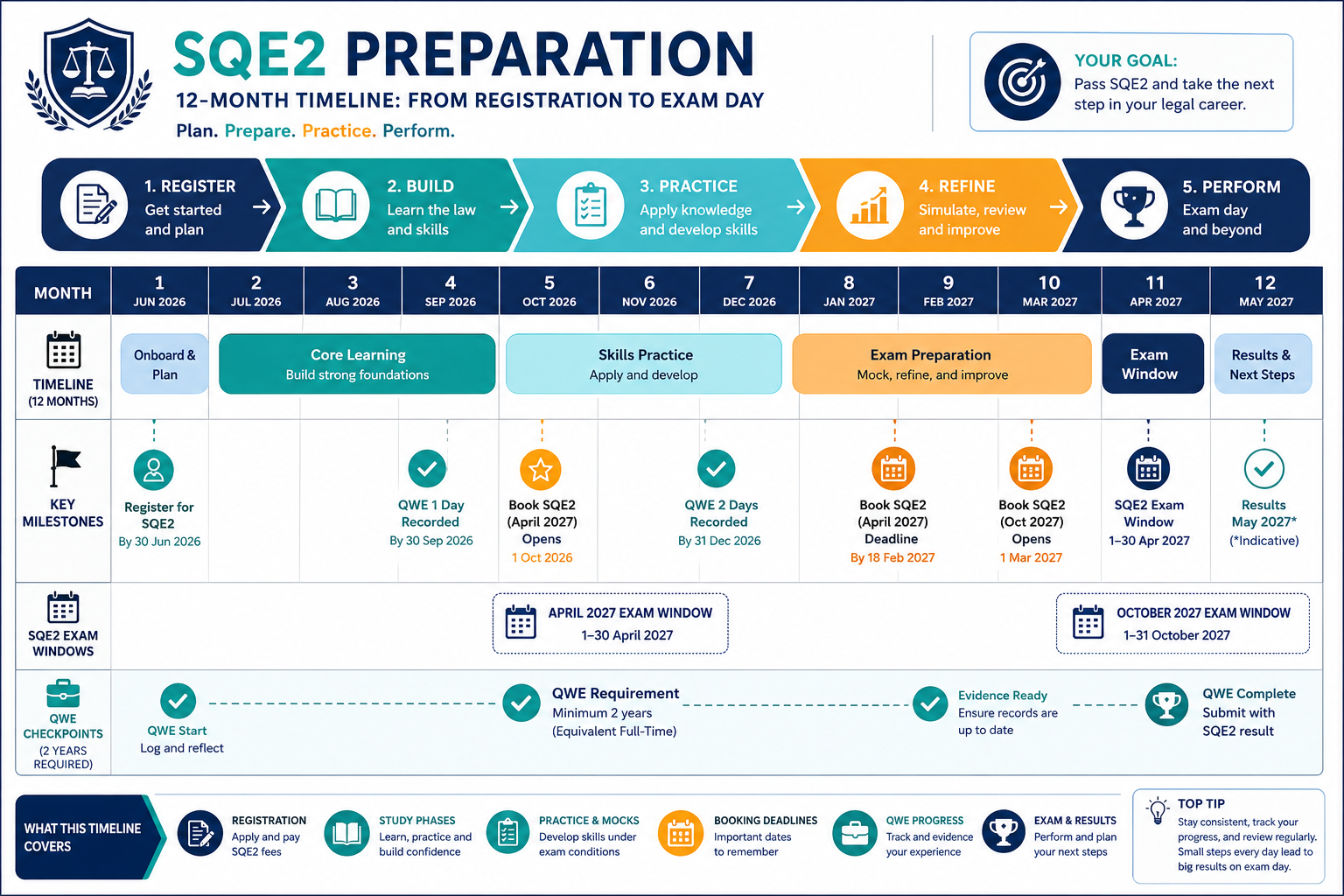
Registration and Booking Deadlines
The SRA typically opens registration for each SQE2 sitting approximately 4-5 months before the assessment window. Standard booking deadlines usually close 8-10 weeks before the first assessment date, with late registration available for an additional fee up until 4-6 weeks prior.
Key Registration Milestones:
| Timeline | Action | Notes |
|---|---|---|
| 5 months before | Registration opens | Secure preferred test centre |
| 10 weeks before | Standard booking closes | Standard fee applies |
| 6 weeks before | Late registration closes | Additional late fee (typically £300+) |
| 4 weeks before | Final deadline | Subject to availability |
Booking early offers several advantages beyond cost savings. Popular test centres in London, Manchester, and Birmingham fill quickly, and early registration gives you more control over your assessment schedule. Some centres offer morning or afternoon slots for certain stations, and early bookers get first choice.
For candidates managing part-time study alongside work, knowing your exact assessment dates months in advance allows you to request time off, arrange childcare, or adjust other commitments well ahead of time.
Building Your SQE2 Preparation Timeline
Once you’ve identified your target SQE2 exam dates, the next step is constructing a realistic preparation timeline. Unlike SQE1’s knowledge-based multiple-choice format, SQE2 demands practical skill development, something that requires consistent practice over weeks, not cramming over days.
Minimum Preparation Periods by Candidate Type
Law graduates with recent LPC experience: 12-14 weeks minimum
These candidates already have exposure to skills training and may need less time to adapt to SQE2’s format. However, the assessment criteria differ from traditional LPC assessments, so focused practice remains essential.
SQE1 completers without prior legal practice course: 16-20 weeks minimum
If you’ve come through the SQE route without completing an LPC or similar course, you’ll need additional time to develop practical skills from scratch. Client interviewing, advocacy, and legal drafting require muscle memory that builds gradually.
Career changers and international lawyers: 20-24 weeks minimum
Candidates unfamiliar with English legal practice or those transitioning from other professions benefit from extended preparation. This timeline allows for foundational skills development plus exam-specific practice.
These are minimum recommendations. Many successful candidates extend their preparation to 6-9 months, particularly when balancing qualifying work experience alongside study.
Structuring Your Prep Timeline in Phases
A well-designed SQE2 preparation timeline divides into distinct phases, each with specific goals and milestones.
Phase 1: Foundation Skills (Weeks 1-6)
Focus on understanding each assessment station’s requirements and developing baseline competency. This phase includes:
- Reviewing SRA assessment criteria for each skill area
- Learning standard legal formats (attendance notes, legal letters, advocacy submissions)
- Practicing basic client interviewing techniques
- Understanding legal research methodology
During this phase, quality matters more than speed. Take time to understand what assessors look for and build good habits from the start.
Phase 2: Targeted Practice (Weeks 7-12)
Shift to intensive, timed practice that mirrors exam conditions:
- Complete full practice stations under timed conditions
- Record and review your performance
- Identify weak areas and drill specific skills
- Join study groups or find practice partners for interviewing and advocacy
This is where structured preparation courses prove valuable, though self-study candidates can achieve similar results with discipline and the right resources.
Phase 3: Exam Simulation and Refinement (Weeks 13-16)
The final phase replicates exam conditions as closely as possible:
- Complete full mock assessments
- Practice back-to-back stations to build stamina
- Refine time management strategies
- Address any remaining weak spots
Many candidates underestimate the physical and mental demands of SQE2. The assessment spans multiple days with several stations per day. Building stamina through realistic practice prevents performance drops during your actual sitting.
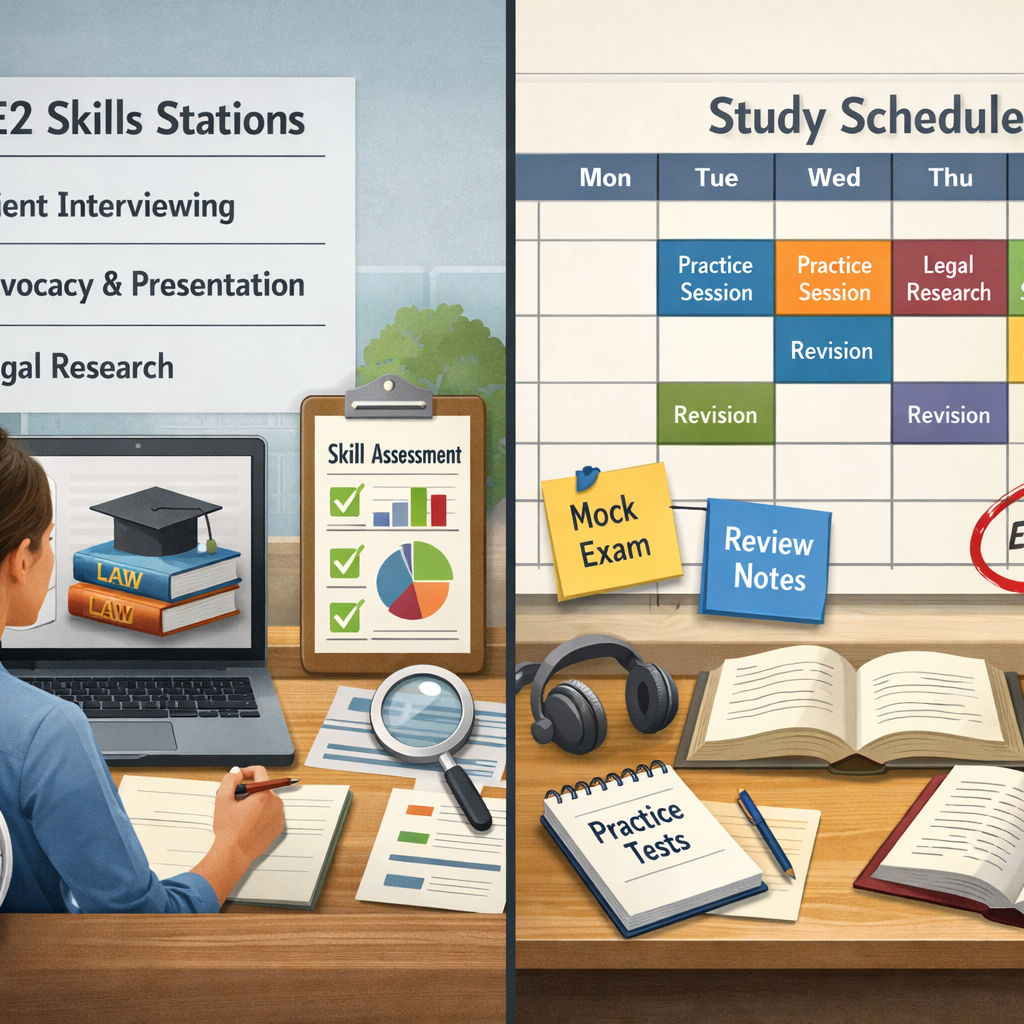
Coordinating SQE2 Prep with Qualifying Work Experience
One of the most challenging aspects of SQE preparation is balancing study with the two-year qualifying work experience (QWE) requirement. The good news: you can sit SQE2 before completing your full QWE, though you’ll need it finished before admission as a solicitor.
Strategic Timing Options:
Option 1: Complete SQE1 and SQE2, then focus on QWE
This approach works well for candidates who prefer to finish exams first, then concentrate fully on gaining practical experience. It’s particularly suitable if you’re funding your own preparation and want to minimize the time between study phases.
Option 2: Gain QWE while preparing for SQE2
Many candidates find that working in a legal environment while preparing for SQE2 reinforces their skills practice. Real client interactions, drafting experience, and exposure to legal research all support SQE2 preparation. However, this requires careful time management and supportive employers.
Option 3: Split approach, partial QWE, then SQE2, then complete QWE
Some candidates complete 6-12 months of QWE, sit SQE2, then return to finish their remaining experience. This provides practical context for skills development while keeping exam preparation focused.
Your choice depends on your circumstances, but understanding how long to prepare for the SQE helps you make an informed decision about timing.
Choosing Your Optimal SQE2 Sitting Date
With SQE2 exam dates typically offered twice yearly, selecting the right sitting requires weighing several factors beyond just “the next available date.”
Factors to Consider When Selecting Your Sitting
SQE1 completion timing
You must pass SQE1 before sitting SQE2. If you’re taking SQE1 in January 2026, the April 2026 SQE2 sitting may be too soon, you’ll receive SQE1 results only weeks before SQE2, leaving minimal preparation time if you pass. The October 2026 sitting would provide a more comfortable buffer.
Personal and professional commitments
Consider your work schedule, family obligations, and other life events. Sitting SQE2 during a particularly busy work period or immediately after a major life event (wedding, house move, new baby) adds unnecessary stress.
Financial readiness
SQE2 costs approximately £2,000-£3,000 for the assessment itself, plus preparation course fees if you choose that route. Ensure you have funding secured well before your target sitting. Candidates who rush into a sitting before they’re financially ready often compromise on preparation quality.
Preparation course availability
If you’re planning to use a preparation provider, check their course schedules. Most providers align their intensive courses with the SQE2 assessment windows, but spaces fill quickly. Booking your course and exam sitting together ensures alignment.
Seasonal considerations
April sittings fall during spring, which some candidates find energizing. October sittings occur in autumn, which can be challenging if you’re affected by seasonal mood changes or if the darker evenings impact your study routine. These factors sound minor but can affect your preparation quality over several months.
Spring vs. Autumn: Which Sitting Suits You?
Spring (April) Sitting Advantages:
- Fresh start after winter
- Longer daylight hours during final preparation weeks
- Results typically arrive by early summer, allowing autumn job searching or QWE completion
- Less competition for some test centres as fewer candidates sit in spring
Spring Sitting Challenges:
- Preparation period spans winter months (December-March)
- May conflict with year-end work pressures if you’re employed
- Easter holidays can disrupt study routines
Autumn (October) Sitting Advantages:
- Preparation period during summer months with better weather
- Aligns well for law graduates finishing in June/July
- Results arrive before year-end, useful for January training contract starts
- More preparation courses available due to higher demand
Autumn Sitting Challenges:
- More candidates compete for test centre spaces
- Preparation during summer may conflict with holidays
- Results arrive during busy year-end period
Neither sitting is inherently better, the right choice depends on your personal circumstances and preparation timeline.
Practical Steps to Lock in Your SQE2 Exam Date
Once you’ve decided on your target sitting, take these concrete steps to secure your place and build your preparation timeline.
Step 1: Verify Current SQE2 Exam Dates
Visit the SRA website to confirm the exact assessment dates and registration windows for your target sitting. While the April/October pattern is established, specific dates vary year to year. The SRA typically publishes dates 12-18 months in advance.
Step 2: Calculate Your Preparation Start Date
Working backward from your chosen sitting, identify when you need to begin preparation based on the minimum timelines discussed earlier. Add a 2-4 week buffer for unexpected disruptions.
Example Timeline for October 2026 Sitting:
- Assessment dates: October 12-23, 2026 (hypothetical)
- Minimum preparation: 16 weeks
- Buffer: 2 weeks
- Preparation start date: June 8, 2026
Step 3: Register as Soon as the Window Opens
Set a calendar reminder for the registration opening date and book immediately. This secures your preferred test centre and avoids late fees. You’ll need:
- Your SQE candidate number
- Payment method (credit/debit card)
- Preferred test centre location
- Any reasonable adjustment requests
Step 4: Book Your Preparation Resources
If using a preparation course, book simultaneously with your exam registration. For self-study candidates, acquire your study materials and create your study schedule immediately. Self-study for SQE2 requires more upfront planning than course-based preparation.
Step 5: Block Out Study Time
Add your preparation schedule to your calendar as non-negotiable appointments. Treat study sessions like work meetings, they’re commitments to your future career.
Step 6: Arrange Practical Support
If you need time off work for the assessment, request it now. Arrange childcare, inform family members of your study schedule, and set up any other practical support you’ll need during preparation and assessment weeks.
Common Timeline Mistakes to Avoid
Even with the best intentions, candidates often make timing errors that compromise their SQE2 success. Here are the most common pitfalls and how to avoid them.
Underestimating Preparation Time
Many candidates, particularly those who passed SQE1 comfortably, assume SQE2 will require similar preparation. This is a costly mistake. SQE2 tests different competencies than SQE1, and practical skills develop more slowly than knowledge recall.
Solution: Use the minimum preparation timelines as actual minimums, not targets. If you can afford more time, take it.
Booking Before SQE1 Results
Some candidates book their SQE2 sitting before receiving SQE1 results, assuming they’ll pass. If you don’t pass SQE1, you’ll need to postpone SQE2, potentially losing your booking fee or paying change fees.
Solution: Wait for SQE1 results before committing to an SQE2 date, or choose a sitting with enough buffer time to resit SQE1 if needed.
Ignoring Personal Circumstances
Booking an exam date that conflicts with major life events, peak work periods, or family commitments creates unnecessary stress and compromises preparation quality.
Solution: Review your calendar for the entire preparation period and assessment window before booking. Be honest about your capacity.
Leaving Registration Until the Last Minute
Late registration costs significantly more and may not guarantee your preferred test centre. Some candidates miss registration entirely and must wait another six months.
Solution: Set multiple calendar reminders for the registration opening date and treat it as a priority task.
Failing to Plan for Resits
While nobody plans to fail, understanding SQE2 pass rates helps you prepare realistically. If you need to resit one or more stations, you’ll need time and funds for additional preparation.
Solution: Build a contingency plan that includes potential resit timing and costs. This isn’t pessimism, it’s practical planning.
Frequently Asked Questions
When should I book my SQE2 exam after passing SQE1?
Most candidates benefit from a 4-6 month gap between passing SQE1 and sitting SQE2. This provides adequate time for skills development without losing momentum. If you passed SQE1 in January, consider the October sitting rather than rushing into April.
Can I sit SQE2 before completing my qualifying work experience?
Yes, you can sit SQE2 at any point after passing SQE1, regardless of your QWE progress. However, you must complete two years of QWE before admission as a solicitor. Many candidates find that gaining some QWE before SQE2 helps with practical skills development.
What happens if I need to change my SQE2 exam date after booking?
The SRA allows date changes subject to availability and fees. Changes made well in advance typically incur lower fees than last-minute changes. Check the current SRA policy on changes and withdrawals, as these rules can be updated.
How much does it cost to sit SQE2, and are there payment plans?
The SQE2 assessment fee is set by the SRA and typically ranges from £2,000-£3,000 (verify current fees with the SRA). The SRA does not offer payment plans, but some preparation providers offer financing for combined course and exam packages. Budget for the full amount before booking.
Is it better to sit SQE2 in April or October?
Neither sitting is inherently superior, the right choice depends on your SQE1 completion date, personal circumstances, and preparation timeline. April sittings suit candidates who passed SQE1 in autumn and want to maintain momentum. October sittings work well for summer law graduates and those needing longer preparation periods.
Can I prepare for SQE2 while working full-time?
Yes, many candidates successfully prepare for SQE2 while working full-time, though it requires disciplined time management. Expect to dedicate 15-20 hours per week over 20-24 weeks. Part-time SQE study is achievable but demands realistic planning and strong organizational skills.
Conclusion
Choosing your SQE2 exam dates isn’t just about picking the next available sitting, it’s about creating a strategic timeline that aligns with your SQE1 completion, qualifying work experience, personal commitments, and realistic preparation needs. The four assessment windows a year (January, April, July, and October) provide flexibility, but success requires planning several months in advance.
Start by identifying your target sitting based on when you’ll complete SQE1, then work backward to calculate your preparation start date. Register as soon as the booking window opens to secure your preferred test centre and avoid late fees. Build a structured preparation timeline that progresses from foundation skills through targeted practice to exam simulation, allowing adequate time for each phase.
Remember that SQE2 tests practical legal skills that develop gradually through consistent practice, there are no shortcuts. Whether you choose the spring or autumn sitting, give yourself enough time to develop genuine competency in client interviewing, advocacy, legal research, drafting, and case analysis.
Your next practical steps: verify the current SQE2 exam dates on the SRA website, assess your readiness based on SQE1 completion and personal circumstances, calculate your preparation start date using the guidelines in this article, and set calendar reminders for registration opening. With a clear timeline and structured approach, you’ll walk into your SQE2 assessment confident and well-prepared.
For additional guidance on structuring your overall qualification journey, explore our complete guide to SQE preparation strategies and learn from candidates who’ve successfully navigated the process.