



You’ll face a critical challenge when tackling tort questions on SQE1: recognizing the distinct patterns that examiners use to test duty, breach, and causation. These three pillars form the foundation of negligence claims, and each has specific frameworks you must apply methodically. Understanding how these elements interconnect isn’t just academic—it’s crucial for spotting issues, applying the correct tests, and structuring your answers effectively. The difference between passing and failing often lies in how well you maneuver through these predictable patterns.
The Essential Elements of Negligence in SQE1 Assessment

Mastery of negligence’s fundamental elements forms the cornerstone of success in your SQE1 tort assessment.
Mastering negligence elements remains essential for SQE1 tort success—duty, breach, causation, and damages.
You’ll need to demonstrate understanding of four critical components: duty of care, breach, causation, and damages.
Each element builds sequentially—you can’t establish liability without first proving the defendant owed a duty specific to the circumstances.
The Caparo test provides the essential framework for establishing duty of care through foreseeability, proximity, and fairness considerations.
Once duty is established, you must show the defendant’s conduct fell below the objective reasonable person standard.
Then, connect this breach to the claimant’s harm through both factual (“but for”) and legal causation. Remember that a claimant’s negligence cannot constitute 100% contributory negligence under the 1945 Act.
Finally, identify actual, measurable damages resulting from the breach.
Mastering the Caparo Test for Duty of Care
You’ll need to master the three-pronged Caparo test to excel in SQE1 tort questions, focusing on reasonable foreseeability, proximity between parties, and whether imposing a duty is fair, just, and reasonable.
When analyzing proximity, you should consider both physical closeness and relationship factors, as established in cases like Donoghue v Stevenson and Hedley Byrne. The test provides judicial discretion to evaluate the specific context of each negligence claim.
The policy considerations within the “fair, just, and reasonable” prong often prove decisive in novel duty situations, where you’ll need to balance potential floodgate concerns against the claimant’s right to compensation.
Three-Pronged Caparo Application
When approaching novel duty of care situations, you’ll need to methodically work through the three-pronged Caparo test to determine whether a legal duty exists.
Begin by establishing foreseeability – could the defendant reasonably anticipate the harm that occurred? This objective assessment forms your foundation.
Next, analyze proximity between the parties. This goes beyond physical closeness to include legal and social relationships, especially where responsibility has been assumed.
Remember, proximity examines whether a sufficiently close connection exists between claimant and defendant.
Finally, consider whether imposing a duty is fair, just and reasonable.
You’ll need to weigh broader societal implications, resource allocation concerns, and potential liability consequences. This final filter prevents unjustified liability expansion while guaranteeing justice is served where appropriate relationships exist. This three-stage test replaced the Anns test which had been criticized for creating inconsistent decisions.
Proximity Requirement Analysis
The concept of proximity, though seemingly straightforward, reveals layers of complexity that stretch far beyond mere physical closeness in negligence claims.
You’ll need to understand proximity as a relationship concept originating from Lord Atkin’s “neighbourhood principle” in Donoghue v Stevenson (1932), which now forms the second stage of the Caparo test.
When analyzing proximity for your SQE1 exam, remember these key dimensions:
- Geographic proximity may establish duty in physical injury cases, creating an emotional immediacy judges recognize.
- Relational proximity examines pre-existing connections that create reasonable expectations of care.
- Assumption of responsibility proximity often dominates in professional negligence scenarios, where trust has been placed.
Don’t be discouraged by judicial uncertainty around this concept—proximity’s flexibility allows courts to adapt duty requirements to novel situations while maintaining reasonable limitations on liability. The incremental approach endorsed by Lord Bridge in Caparo emphasizes developing negligence categories through established analogies rather than massive extensions of prima facie duty.
Policy Considerations Explored
Although foreseeability and proximity might establish the groundwork for duty of care, policy considerations form the crucial final hurdle in the Caparo test that can either cement or demolish a negligence claim.
You’ll need to demonstrate how imposing duty would be fair, just, and reasonable within the specific context of your scenario.
When analyzing policy factors, consider potential floodgate concerns, especially with public authorities like police.
Courts actively resist indeterminate liability that might overwhelm the legal system or create defensive practices in fundamental services.
The Supreme Court ruling in Robinson established that police officers do not have blanket immunity from negligence claims when their actions directly cause foreseeable injury.
The landmark case Murphy v Brentwood further illustrates how policy considerations can restrict liability, particularly in claims involving pure economic loss.
You’ll find this third limb particularly restrictive when dealing with public bodies, where courts balance individual rights against broader societal interests.
Applying the Objective Standard in Breach Evaluations
Determining whether a defendant has breached their duty of care requires you to apply the objective standard—a cornerstone principle in negligence law that transcends personal characteristics or subjective intentions.
You’ll need to assess what a reasonable person would’ve done in the defendant’s position, not what the defendant thought was appropriate.
When analyzing breach on the SQE1, you should:
- Evaluate the risk factors: likelihood of harm, severity of potential injury, and cost of precautions
- Identify the correct comparator—whether an ordinary person or a professional standard applies
- Apply knowledge available at the time, avoiding the trap of hindsight bias
This objective standard was firmly established in the BLE v. Birmingham Waterworks case, which introduced the hypothetical reasonable person as the benchmark against which all defendants’ actions must be measured.
Key Causation Principles Every SQE1 Candidate Should Know

You’ll need to master three vital causation principles for SQE1 success: the “but for” test which establishes whether the defendant’s actions were necessary for the harm to occur, material contribution analysis for complex multiple-cause scenarios, and novus actus interveniens which determines if an intervening event breaks the causation chain.
Understanding these principles will help you analyze fact patterns where multiple events contribute to harm, especially when you’re faced with tricky scenarios involving intervening acts or concurrent causes.
Remember that examiners often test these concepts through scenario-based questions that require you to determine if a claimant can establish the vital causal link between breach and damage. A good example is when a natural disaster like a tsunami occurs after a breach but before damage manifests, potentially breaking the chain of causation.
Candidates with overseas QWE can still apply these causation principles in their SQE preparation, even if their legal experience was gained outside England and Wales.
“But For” Test Application
When you’re tackling causation on the SQE1 exam, the “but for” test stands as the cornerstone principle you’ll need to master. This test asks a simple question: would the plaintiff’s injury have occurred if the defendant hadn’t acted negligently? If your answer is “no,” you’ve established factual causation.
Remember these critical applications that frequently appear on exams:
- When multiple causes exist, the but-for test may fail—look for questions requiring alternative approaches like the substantial factor test.
- The test connects breach of duty directly to harm—without this link, negligence claims collapse.
- Failed but-for causation creates excellent defense arguments—spot these opportunities in scenario questions.
The test is primarily concerned with establishing a direct link between the defendant’s actions and the plaintiff’s injury to ensure proper liability determination.
Don’t confuse factual causation with legal causation (proximate cause); both are required, but the but-for test addresses only the former.
Material Contribution Analysis
While the “but for” test serves as your primary tool for establishing causation, it sometimes falls short in complex scenarios—this is where material contribution analysis becomes invaluable.
You’ll need this exception when dealing with cumulative causes where multiple factors contribute to a single harm.
Remember that your contribution must be more than negligible—courts apply a de minimis threshold requiring substantial connection between breach and damage.
For divisible injuries like industrial deafness, you’ll argue for apportionment based on contribution percentage.
With indivisible injuries, however, proving material contribution typically triggers full liability. This principle connects to the broader requirement of establishing actual causation between the defendant’s actions and the resulting harm.
Don’t confuse this doctrine with material increase in risk; they’re distinct exceptions.
Material contribution specifically addresses situations where a defendant’s breach formed part of a cumulative process causing actual damage, even alongside non-tortious factors.
Novus Actus Interveniens
Understanding novus actus interveniens represents a critical turning point in your causation analysis for SQE1 preparation. This Latin principle means “new intervening act” and can effectively break the chain of causation between a defendant’s breach and the claimant’s damage.
You’ll need to assess whether an intervening event was truly independent and not foreseeable at the time of the original negligence.
When analyzing potential novus actus scenarios, remember:
- Acts must be voluntary, free, and informed to qualify—instinctive reactions rarely break the chain
- Claimant’s own actions only break causation if “wholly unreasonable” (McKew v Holland)
- Third-party interventions, natural events, and claimant actions form the three main categories
Don’t confuse contributing factors with true intervening acts—the threshold for breaking causation remains high in practice. The doctrine operates as a crucial defense in tort claims when defendants seek to limit their liability for consequences disconnected from their actions.
Breaking the Chain: Analyzing Intervening Acts
Although the chain of causation may seem straightforward in many tort cases, intervening acts can dramatically alter liability outcomes by severing the causal link between a defendant’s breach and a claimant’s injury.
You’ll need to identify whether the intervening act falls into one of three categories: claimant acts, third-party acts, or natural events.
For SQE1 success, remember that foreseeability is your analytical cornerstone. When a claimant behaves recklessly (as in McKew), or when a third party introduces an independent cause, you’re looking at potential breaks in causation.
The courts will ask whether the intervening act was a “direct and substantial cause” separate from the original negligence. Your answer should demonstrate how the defendant can satisfy their burden of proof by showing the act was unforeseeable and independent.
This principle was clearly illustrated in Jobling v Associated Dairies Ltd, where the development of an unrelated new disease constituted an intervening act that limited the employer’s liability to damages that occurred before the disease’s onset.
Remoteness of Loss and the Reasonable Foreseeability Test
Once the factual causation hurdle has been cleared, you’ll face the second causation challenge on the SQE1: determining whether the damage suffered is too remote from the breach to justify compensation.
The reasonable foreseeability test asks whether a defendant should have anticipated the type (not extent) of harm that occurred.
The law doesn’t require crystal ball precision—just reasonable anticipation of the type of harm that might result from your actions.
When tackling remoteness questions, remember these key principles:
- The “Wagon Mound” case established that only reasonably foreseeable consequences create liability
- You need only foresee the type of harm, not the precise manner of occurrence
- The eggshell skull rule means you take your victim as you find them
Apply this test practically by asking: “Would a reasonable person in the defendant’s position have foreseen this kind of damage?”
Focus on what was known at the time of breach, not with hindsight.
Understanding these principles is essential for both the SQE1 exam and when completing your Qualifying Work Experience as part of the SQE pathway.
Contributory Negligence and Mitigation of Damage
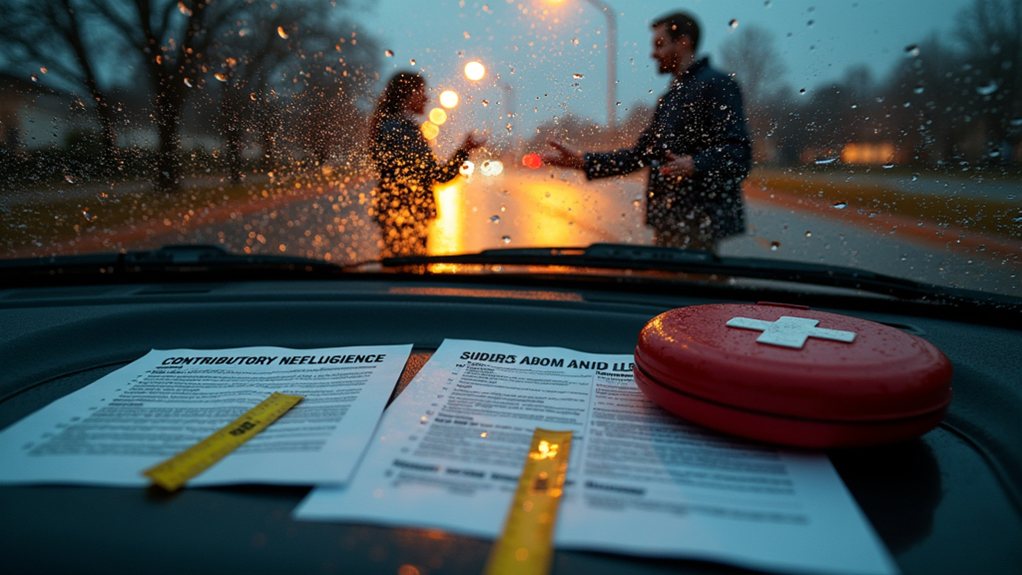
When facing a contributory negligence issue on the SQE1, you’ll need to determine if the claimant’s own careless actions partially caused their injury.
Remember, this defense requires the defendant to prove the claimant failed to take reasonable care for their own safety, which contributed to the harm suffered.
Unlike comparative negligence systems, traditional contributory negligence can completely bar recovery, even when the claimant is only minimally at fault. This creates an all-or-nothing rule that many jurisdictions have moved away from due to its potentially harsh outcomes.
You’ll need to analyze whether:
- The claimant breached their own duty of care
- This breach was a legal cause of the injury
- The harm was reasonably foreseeable
Don’t confuse this with mitigation of damage, which concerns a claimant’s responsibility to minimize losses after the injury has occurred, rather than affecting initial liability apportionment.
Special Duty Scenarios and Their Examination Pattern
Special duty scenarios on the SQE1 exam frequently test your ability to identify non-standard duty relationships that extend beyond the typical neighbor principle.
You’ll need to recognize when supervision relationships, institutional settings, or emergency services create special obligations that wouldn’t exist under general duty rules.
When analyzing these scenarios, watch for:
- Misfeasance versus non-feasance distinctions where active interference creates stronger duties than mere inaction
- Situations involving vulnerable populations where modified standards apply
- Cases where professionals have accepted responsibility, creating reliance and subsequent duty
The examiners love testing the boundaries of duty in third-party harm scenarios, especially where an entity’s negligence in containing dangerous individuals results in foreseeable injury to others.
You’ll score higher by spotting these special relationships rather than defaulting to standard proximity analysis.
Similar to how fair trial principles affect evidence admissibility in criminal proceedings, tort law contains critical procedural safeguards that determine when special duties arise.
Practice with 360 MCQs can significantly strengthen your ability to identify these special duty scenarios and improve your performance on the SQE1 exam.
Final Thoughts
You’ll master duty, breach, and causation when you practice pattern recognition rather than isolated facts. While exam scenarios might feel overwhelming, the structured approach of Caparo provides clarity. Apply the reasonable person standard consistently, yet recognize its flexibility in special circumstances. Remember: negligence isn’t about perfection—it’s about reasonable conduct. Your success in SQE1 depends on balancing technical knowledge with practical application.